Holly D. Landez ePortfolio
A Collection of My Work in edTech

Practical & Effective Professional Learning
Steps to Success – Heading in the right direction for transformative professional learning
High quality professional learning has always been a strength within Killeen Independent School District. In the 27 years that I have been a KISD employee, I have earned over 1473 hours of professional learning. As the District Instructional Technologist for elementary, I propose and hope to enact an innovative, comprehensive, alternative instructional technology professional learning plan that will continue that solid tradition of providing high quality professional learning opportunities for teachers, but also enhance it.
Part 1 – Why?
In Killeen ISD our mission statement is to “Teach so that students learn to their maximum potential.” To me, this is a two-fold mission if we consider our teachers to be our students, then we want to help them reach their maximum potential. It is upon us to provide opportunities for our teachers to build solid teaching practices. This in turn, will allow them to guide students to learn to their maximum potential.
The Killeen ISD Vision is “Through the implementation of a full, innovative, rigorous, comprehensive education program, Killeen ISD will provide superior learning opportunities so that upon graduation, students are prepared for success in the workforce and/or in higher education.” As our education program for students needs to be full, innovative, rigorous and comprehensive, so does our professional learning program.
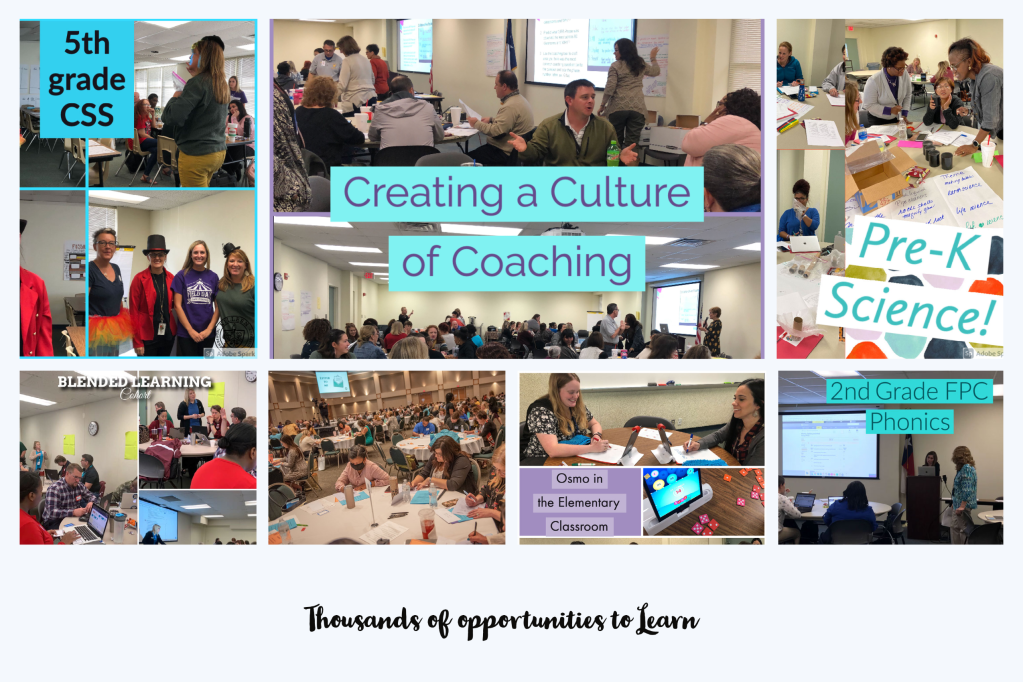
Some of our current strengths in the area of professional learning are:
Curriculum Study sessions – Our elementary teachers have opportunities to learn from teacher leaders in their grade level quarterly to discuss lesson ideas and best practices for their upcoming units.
Culture of coaching – At the elementary level we have 10 instructional coaches focused on promoting stellar teaching standards in math and literacy. These include coaching walks and weekly meetings with their teachers.
Weekly PLCs – Teachers create unit plans and review common unit assessment date to drive instructional decisions.
Summer Professional Learning – There were over 300 summer professional learning sessions available this summer!
New Teacher Induction – We host hundreds of new teachers in Killeen ISD every year.
Mentor Training – Teachers support each other, and this training is the first step to that support!
Restorative Practices – Every teacher in Killeen ISD received Restorative Practices training to achieve social discipline through participatory learning and decision making.
I could go on and on about the wonderful opportunities!
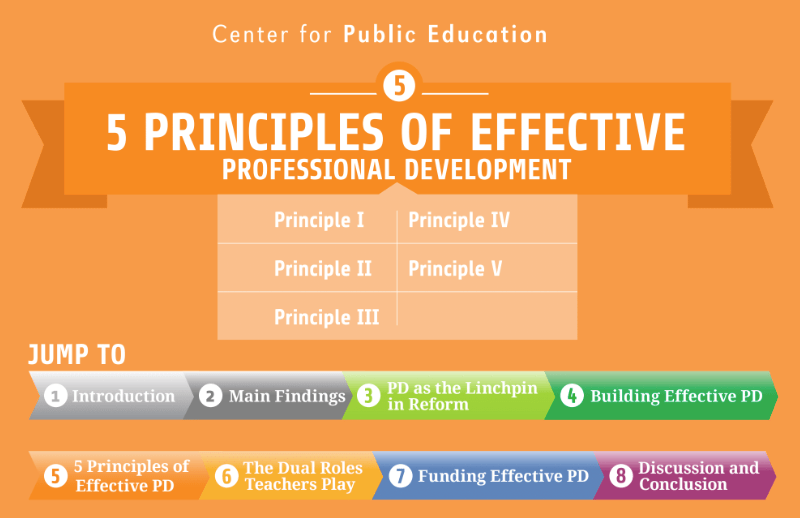
Much of what we already do follows the suggestions of Allison Gulamhussein’s 5 Principles of Effective Professional Development:
- The duration of professional learning must be significant and ongoing to allow time for teachers to learn a new strategy and grapple with the implementation problem. (This is what my plan has that the other opportunities may not include.)
- There must be support for a teacher during the implementation stage that addresses the specific challenges of changing classroom practice. (Hence learning coaches.)
- Teachers’ initial exposure to a concept should not be passive, but rather should engage teachers through varied approaches so they can participate actively in making sense of a new practice. (Teachers will have opportunities to practice their skills in the classroom!)
- Modeling has been found to be highly effective in helping teachers understand a new practice. (Teachers will have opportunities to observe colleagues teaching.)
- The content presented to teachers shouldn’t be generic, but instead specific to the discipline (for middle school and high school teachers) or grade-level (for elementary school teachers).
But even with all of these wonderful happenings, we can still take steps to aim higher and help our teachers and students reach their full potential, particularly in the area of instructional technology and integration. My hope is that this alternative learning plan will be the steps we need to take in the right direction toward building a digital learning ecosystem. With the skills they build for themselves and their colleagues, teachers will be able to masterfully integrate technology and blended learning strategies when the situation calls for it.
Throughout the pandemic, teachers had the need to embrace and learn multiple digital learning tools in order to successfully teach virtually. They did this willingly and swiftly out of an urgent need. My hope is that they learned some new tricks of the instructional trade that they could use to make their face-to-face teaching easier, more rich or more effective. I also hope that with face-to-face learning, teachers do not lose their newly gained skills. Rather, I hope that we can capitalize on that learning and build upon what they learned to improve every day instruction.
According to a 2017 study published by The American Society for Cell Biology, Active learning activities such as group discussions and quiz questions are not enough to cement learning. Rather, for true construction of learning, active activities, accompanied by eliminating misconceptions, and formative assessment of student understanding must occur.
In a 2015 ASCD article, Bryan Goodwin contends that when it comes to collaboration and coaching in the area of professional learning, quality trumps quantity. He goes on to say that what frequently occurs is that experts are brought in to share new practices that are to be adopted by teachers. This does not follow the same line of thinking or model what we would want teachers to do for students. Rather, it is more of a behaviorist than constructivist approach.
I believe that collaboration and coaching are essential, but like Goodwin, I believe that it must be quality collaboration. That means that teachers are revisiting new methods, observing each other and following up with guiding questions and protocols. Ultimately, teachers will use data to support strategies and guide their instruction. If the teachers in my 3-year plan will follow the coaching model that we already have established in our district, incorporating technology and evaluating how that affects student achievement, then we will certainly succeed!
Another step in the right direction is to include learners of all levels into the plan. This means that the learning should be available to various audiences, such as: teachers, curriculum specialists, librarians and other campus administrators.
In the video Innovation That Sticks Case Study, Denise Andre, director of Education at the Ottawa Catholic School Board, emphasized that in their successful professional learning model, school leaders are learning side-by-side with the teachers, fully involved. When the school leader is involved in a session as a learner that demonstrates multiple fundamentals:
- is that they believe the importance of what is being taught.
- they are removing themselves as the expert
- they are walking the talk and fully invested
“What is our next best step toward creating a digital ecosystem to empower our teachers to positively impact learners?”
I believe that it is my three year plan which includes:
- Blended Learning Cohorts – for 3rd – 5th grade teachers.
- Includes campus administrative staff
- Instructional Technology Coaches
The next phase of my presentation (which will be posted here next week) will outline these elements in greater detail.

Part 2
In designing my call to action video I took several steps to prepare and used multiple tools and resources. First, I had to consider Simon Sinek’s message and the “WHY” of what I was hoping to accomplish. That is to help transform what already exists as a high-quality professional learning environment to include instructional technology and blended learning at a deeper level. Second, I included some research about effective professional learning principles. Third, I consulted my school district website to refresh my memory about our mission and vision. Additionally, I gathered statistics about professional learning in my school district to include how many sessions I have attended and how many professional learning sessions my department, Elementary Learning Services, has presented lately.
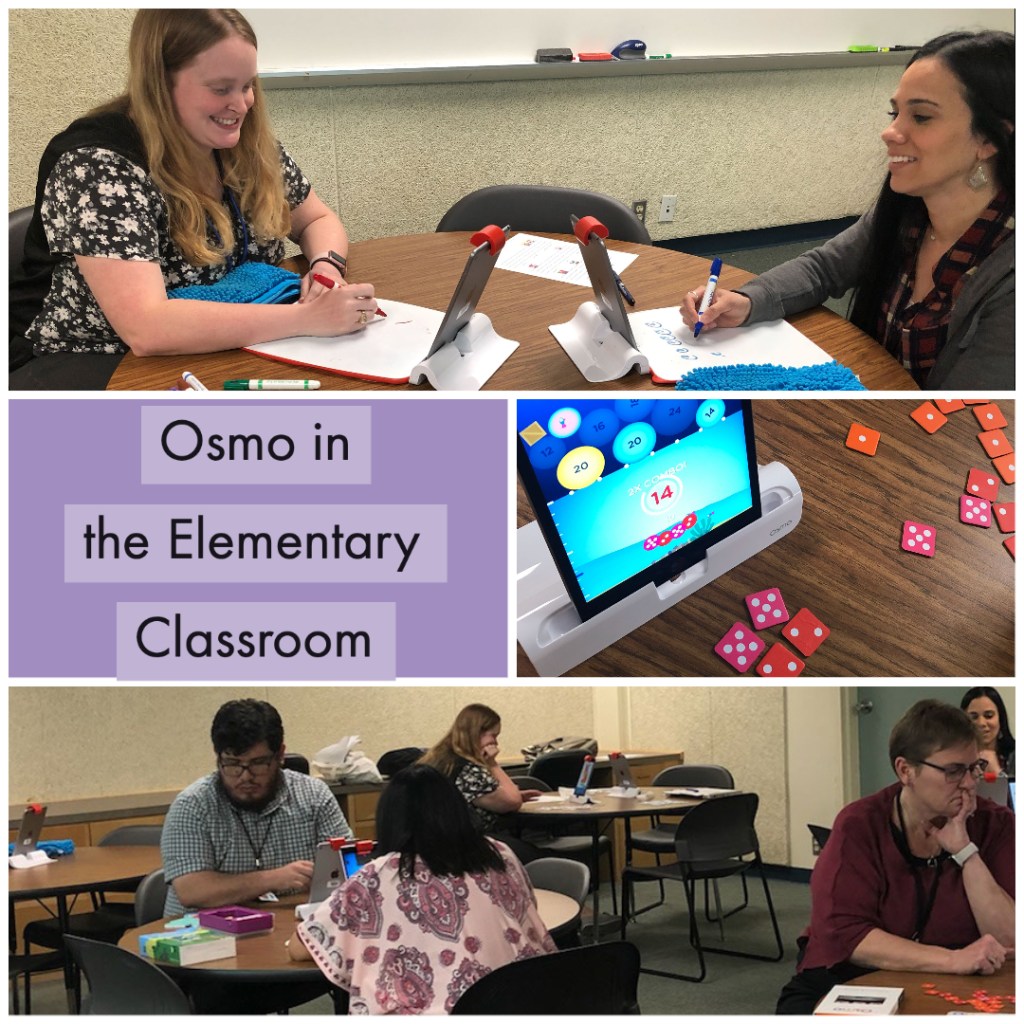
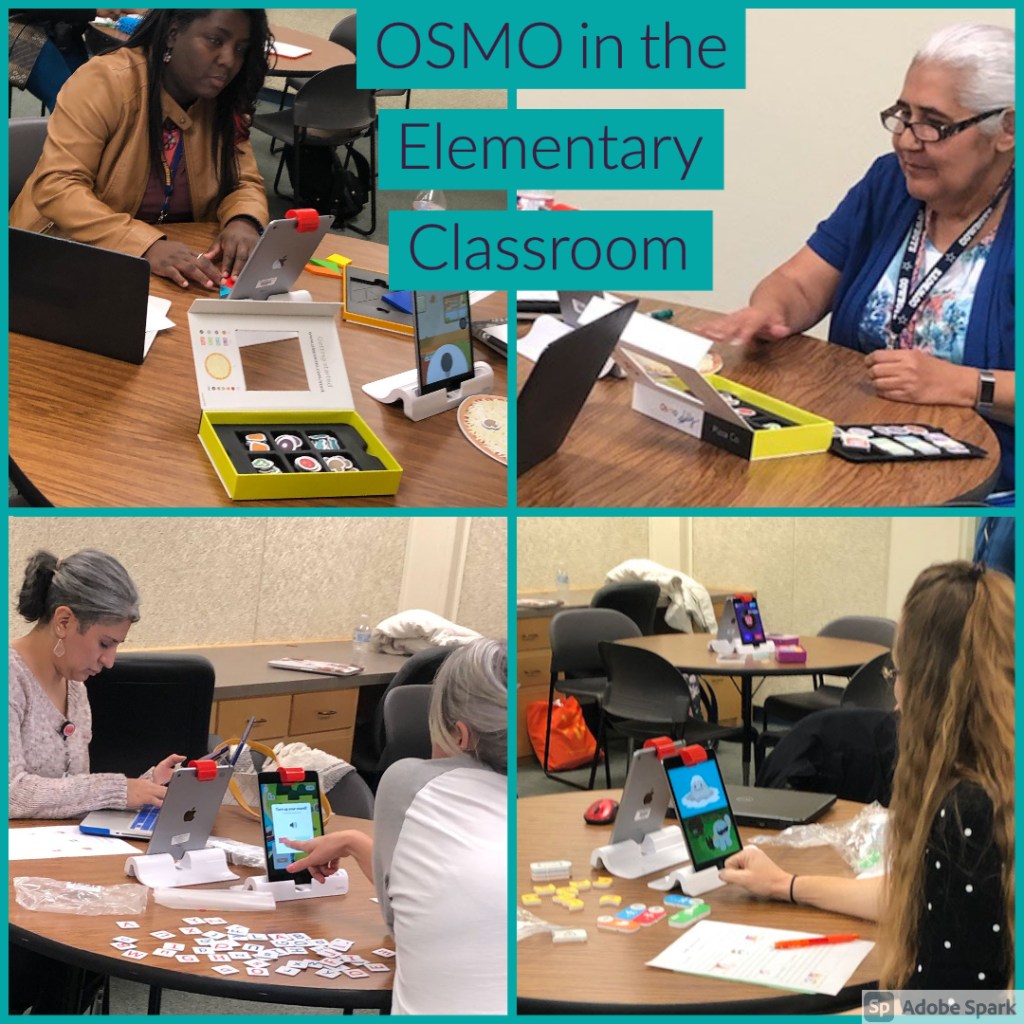
It was great fun to pull together some images that I have of our own teachers and other instructional staff engaging in various professional learning opportunities. Then I learned how to include some stock video footage and audio files from YouTube and convert them. PowerPoint helped me locate some icons and modify them to fit my color scheme. I used a Google slide template from Slides To Go to bring my color scheme together.
Finally, I took the advice of Nancy Duarte and Jennifer Gonzalez with their presentation techniques as I put it all together in Adobe Spark. I am hopeful that these efforts are fruitful as I share this alternative learning plan with the leadership in my district.


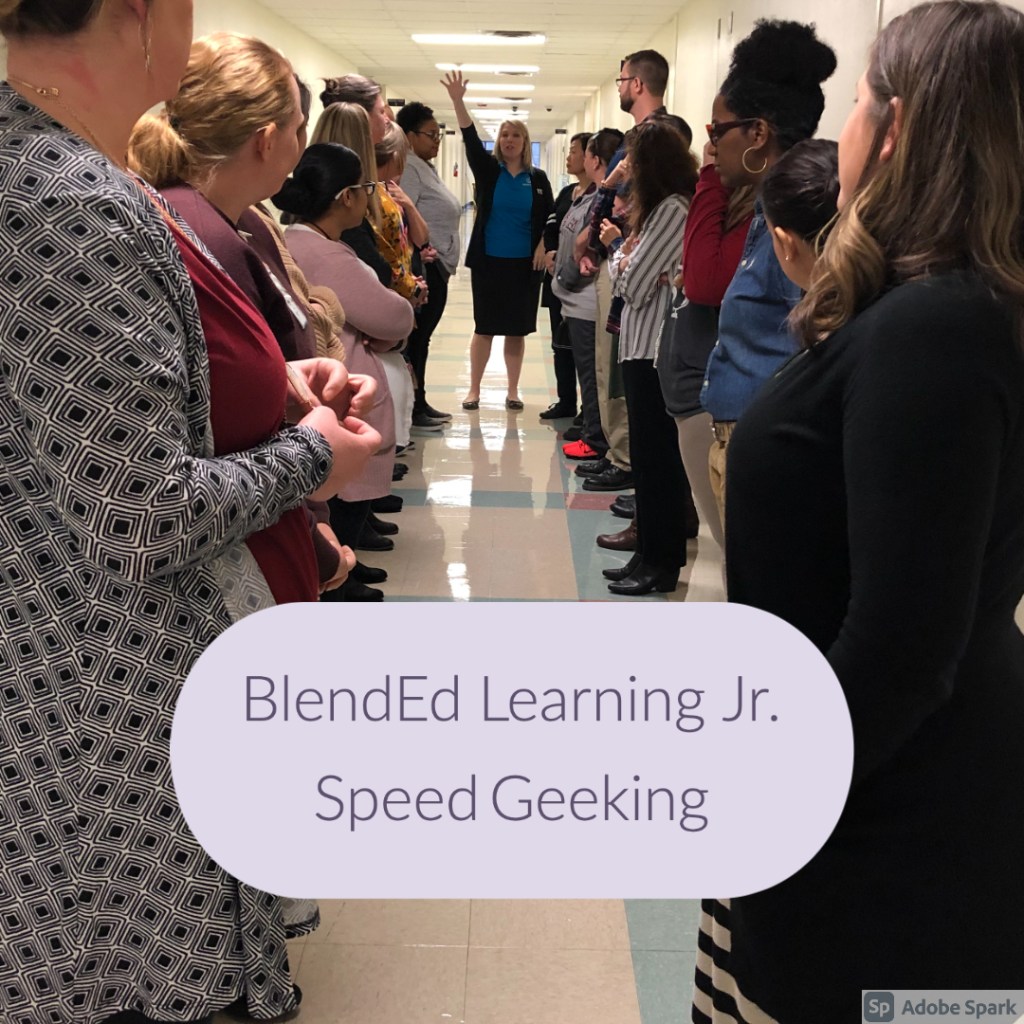


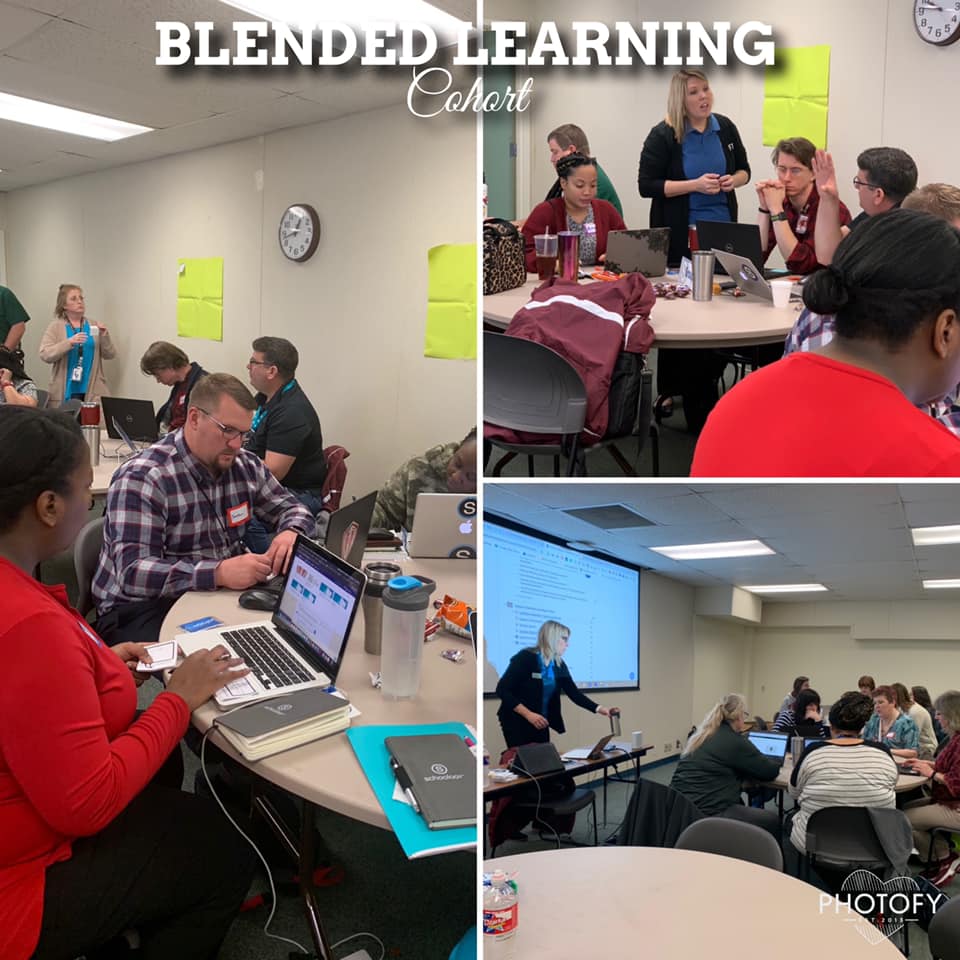
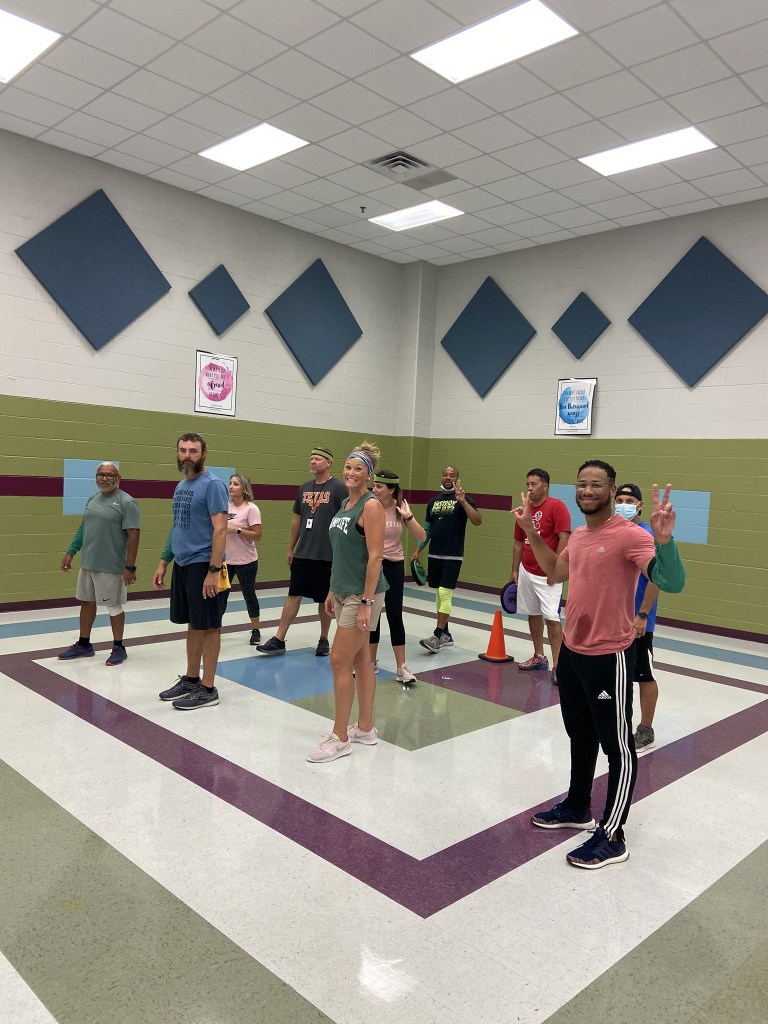


4K HD Free Stock Footage No Copyrights. (2020). Kids Free Hd Stock Footage For Download and Reuse Without Copyright. YouTube. https://youtu.be/ENi-gJVCjeQ.
Andrews, T. M., Leonard, M. J., Colgrove, C. A., & Kalinowski, S. T. (2017). Active learning not associated with student learning in a random sample of college biology courses. CBE—Life Sciences Education, 10(4), 394–405. https://doi.org/10.1187/cbe.11-07-0061
EdCan Network Le Réseau ÉdCan. (2016). Innovation That Sticks Case Study – Ocsb: Collaborative Professional Development. YouTube. https://www.youtube.com/watch?v=iUusuw-xdr4.
Glatch, S., Mahoney, E., & Becky. (2021, July 30). The 5 stages of freytag’s pyramid: Introduction to dramatic structure. Writers.com. https://writers.com/freytags-pyramid.
Goodwin, B. (2015, December 1). Research Says / Does Teacher Collaboration Promote Teacher Growth? ASCD. https://www.ascd.org/el/articles/does-teacher-collaboration-promote-teacher-growth.
Gulamhussein, A. (2013, September) Teaching_Effective_Professional_Developmt.pdf. Dropbox. https://www.dropbox.com/s/j13c5mk092kmqv9/Teaching_Effective_Professional_Developmt.pdf?dl=0
Life Mentor. (2018). Simon Sinek – How to present properly(Part 5). YouTube. https://youtu.be/msvmLlAkOno.
Stanford Graduate School of Business. (2013). Nancy Duarte: How to Tell a Story. YouTube. https://youtu.be/9JrRQ1oQWQk.
The cure for bad powerpoint: A review of presentation zen. Cult of Pedagogy. (2020, June 13). https://www.cultofpedagogy.com/presentation-zen/.
Watchel, T. (n.d.). Defining restorative: Restorative practices. IIRP. https://www.iirp.edu/restorative-practices/defining-restorative/.
Evaluating Courses for Online Learning & 3D Printing Course Notes Part 4 & EDLD 5318 Reflection
This course, EDLD 5318, Instructional Design in Online Learning, has been a valuable learning experience. I have certainly enjoyed to opportunity to consider the essential elements of successfully designing an online course. Beyond simply considering course design, I especially enjoyed the freedom to plan a course that would support the launch of the current 3D printer initiative in my district. The online course I have planned will be available for all district staff regardless of level or role. This will extend the reach of our 26 new 3D beyond the walls of the elementary school libraries.

That is a lofty goal! Therefore, it is imperative that the course is designed to set the educators up for success. In Teaching in a Digital Age: Guidelines for Designing Teaching and Learning, Tony Bates provides a high volume of information for instructors to consider when planning an online course. I especially valued this resource because it was made available for free, along with accompanying audio and video materials. This format was an excellent example of the need to provide information to students in varying contexts. I will continue to refer to this online textbook throughout my career as I support teachers in designing their online courses. Some other valuable takeaways that I gleaned from from Bates’ text were:
- There are structural changes in the way information has become available to learners and the education system needs to adapt.
- These structural changes will allow teachers to effectively prepare a higher volume of students.
- Online teaching can and should involve various pedagogies and not rely on one method, such as lecture.
- Various types of courses require various modes of delivery.
- Regardless of the content of the course or mode of, quality is key.

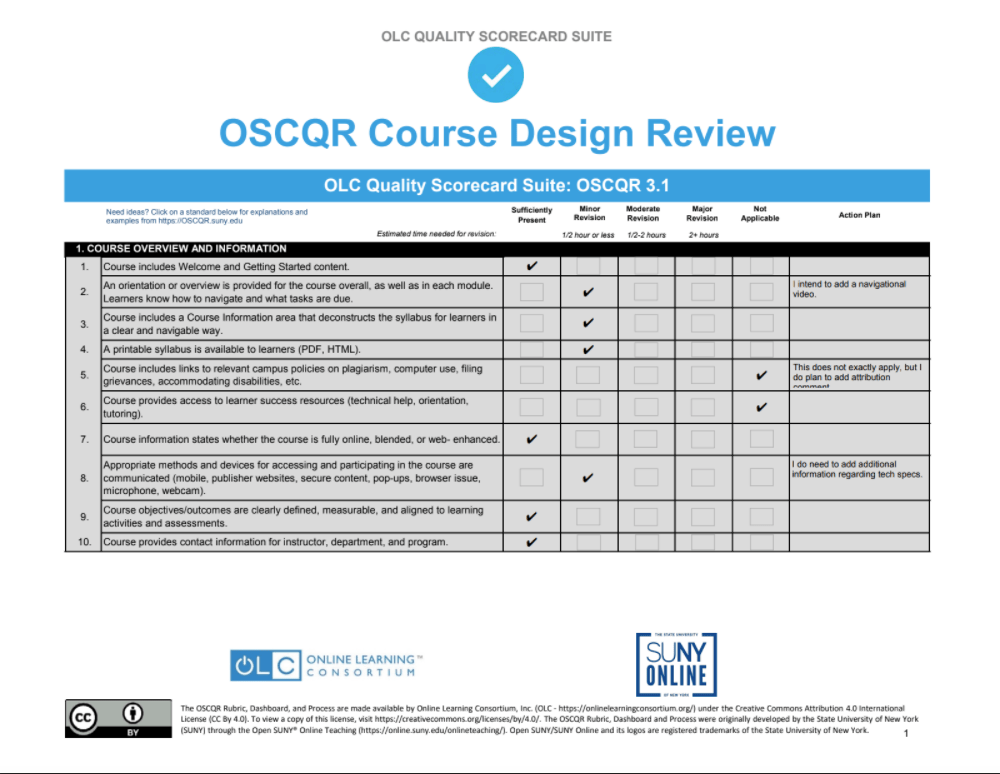
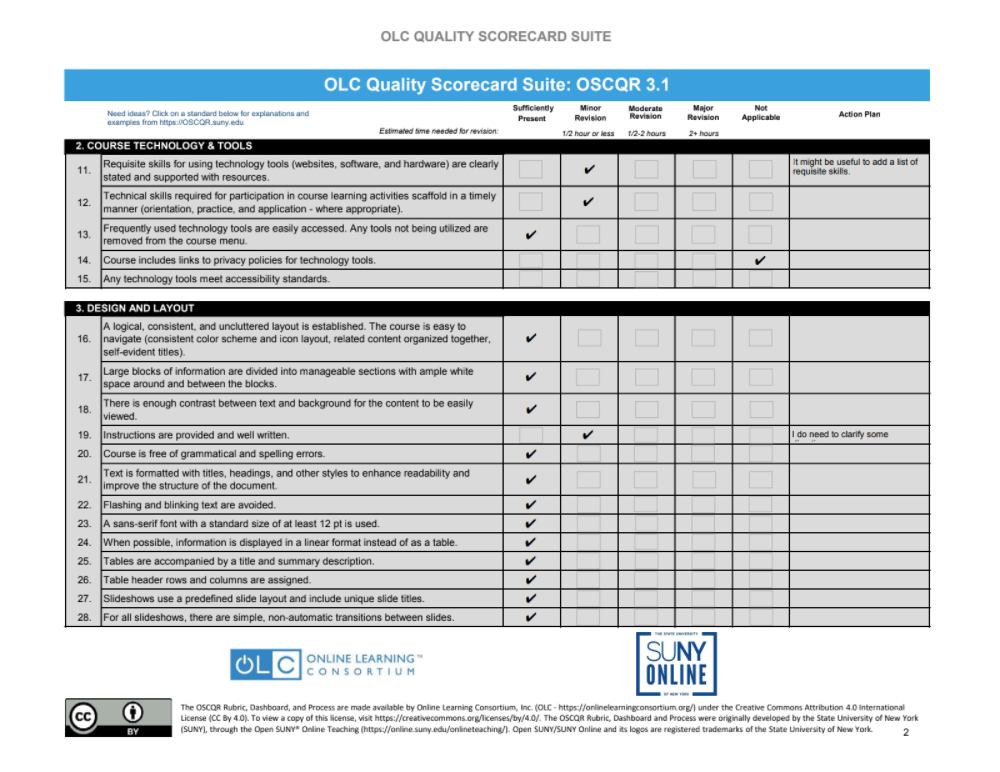
Following along with idea of quality assurance, we had the valuable opportunity to use The OLC OSCQR Course Design Review Scorecard by SUNY. The assessment was very enlightening as it gave me several opportunities to review course elements that I had not considered before. Linked below are my self-assessment and action plan. I intend to add all of the mentioned corrections before August 23, as that is the date I have promised the course will be ready for our district staff.


According to the 2015 Project Tomorrow report, Trends in Digital Learning: Empowering Innovative Classroom Models, “three-quarters of principals attribute increased student engagement in learning to the effective use of digital content in their blended learning classrooms.” I am hopeful that implementing the 3-D printing course using a blended model, may inspire teachers to try something similar in their students.

In addition to modeling effective blended online course design, my aim was to include various methods of pedagogy, as well as embed some theories about project-based learning. This is mentioned in the Understanding by Design Template linked below in which I considered:
- STAGE 1 Desired Results and Established Goals
- STAGE 2 Evidence of Learning & Assessment
- STAGE 3 Learning Plan with Key Learning Events
Understanding by Design Plan for Online Course
The primary goals of the course are for teachers to feel they are proficient in creating 3D designs and guiding students in creating 3D models to support learning standards.
As I mentioned in a previous post, I believe that the four learning theories: Behaviorism, Cognitivism, Constructivism, and Connectivism support blended learning and all fit into the online course.

Behaviorism has a role in the course in a couple of ways. If the learner wants to succeed in the course, they will need to engage in the activities, and invest the time to learn. The activities in the course are mixed, and some will require more effort than others. To encourage learners to proceed and not get discouraged, they will need frequent feedback. I built in a few self-checking activities so that the learners will move forward. I have personally experienced self-paced courses that are too easy to proceed through because the correct answers are shown at the end of the quick module, or the learner has unlimited attempts. This does not generally lead to deep learning.

Cognitivism which focuses on memory and problem solving, fit into the course with some quick checks for understanding. One example is a Quizlet game on the basic vocabulary of 3D printing such as scale, slice, support, filament, extruder. Each module of the course builds upon the other, and includes quick assessments that spiral in content knowledge from previous modules.

Constructivism, which focuses on experiences, is really the basis of the course. I intend for the learners to have hands on experiences with the 3D printer and their software tool of choice. There are points along the way where the learners will need to demonstrate that they are practicing the skills by uploading photos of their creations or screenshots of their software work. Additionally, they have opportunities to design lessons and projects in which students will need to participate. The goal is for them to transfer their new 3-D printing skills to logically support their regular classroom instruction.

Connectivism is also woven into the course because the learner must be able to determine the important and unimportant information relevant to their role. For example, on the website Thingiverse, there is a HUGE variety of 3D files that users are able to download and print. A preliminary activity might be to print an object that was pre-designed just to get the experience of loading the filament, aligning the build plate, and ensuring the object prints. Because of the time and materials needed to print they would need to make a good choice about which objects to print. Optimally, participants will choose something that applies to their teaching role or content in some way. Beyond filtering important information, connectivism also has to do with networking. One of my hopes is that participants in the course will work together to encourage each other to try different things and potentially build some collaborative projects for students. A true measure of success of the course would be for an elementary and middle campus to join together to have students create service-oriented projects to benefit the community.

In my online Schoology course for 3-D printing, I included several modes of communicating with the participants. Primarily there will be the text directions on screen. In addition, there will be some short video clips to give directions. Additionally, we will have our weekly informal zoom meetings as well as a discussion post. Finally, there will be feedback on assignments. Participants can leave their notification settings in the LMS turned on so that they receive email communication with anything that is posted or graded.

While this course is designed to last the span of five weeks, there is some element of self-pacing. As the course is completely elective for teachers, and it’s a choice for them to participate, I do not intend to lock them into completing it within five weeks. The goal of the course is to successfully integrate 3-D printing with instruction. This can take much longer than five weeks, particularly if they are following through with the project-based design in module five.
The course will be updated as needed based on suggestions or questions by the participants. Participants experiencing the course may notice if some elements are missing or if portions of modules can be more logically rearranged. I am hopeful that the teachers and other staff members that participate in the course will feel comfortable enough to provide that type of feedback.

As our school district is highly entrenched in the Schoology LMS, we are only limited by our imagination (and time) as to what types of courses we could provide as professional learning opportunities for staff members. In addition to the 3-D printing course, I am looking forward to developing some self-paced book study courses by some of my favorite EdTech authors such as Jennie Magiera, Monica Burns, and Catlin Tucker.

In my next course, I hope to implement more of the Playposit video questions. I like the idea of having thoughtful thinking stops in checks for understanding in the videos. I may not wait until the next course, I will likely add those checks for understanding in this course before I share it with teachers.

In our district for professional learning, we include a survey opportunity for teachers. This is a requirement for our courses, and I intend to include that with this 3-D printing course as well as other online learning opportunities that we have for teachers. For every session, I always read the feedback and strive to improve based on the suggestions. One element that I will use for quality assurance is to recognize whether additional staff members are signing up for the course. People tell their friends about good experiences. If my course draws plenty of staff members to it, then that’s a good sign of the quality. If not, then there is absolute room for improvement.

I hope that this 3D printing course is as successful as other courses that I have participated in. There are so many! I have seen successful online book studies designed by my colleagues over the Distance Learning Playbooks and many other pedagogical books. I have been engaged in successful online teachable courses designed by EdTech professionals such as:
- Catlin Tucker: Getting Started with Blended & Online Learning
- Monica Burns: Easy EdTech Club
- National Virtual Teacher Association
- Carl Hooker: Remote Learning Coach
- Matt Miller: Ditch That Textbook
- Holly Clark: Infused Classroom
- Jennifer Gonzalez: Cult of Pedagogy
As well as online courses designed by my classmates:
- Jennifer Simmons: Design Based Learning
- Jen Kober: Worthy Writing
- Hannah Colletti Danielson: WH Stark House
Just like the craft of face-to-face classroom teaching, online course design can be successfully measured by various methods. Successful courses will vary from instructor to instructor. As long as participants feel successful and that they have learned the goals and objectives, that is what counts!

References:
- Bates, T. (2019). Teaching in a digital age: guidelines for designing teaching and learning (2nd ed.). BCCampus.
- McTighe, J. &Wiggins, G. P. (2005). Understanding by design. Association for Supervision and Curriculum Development.
- Olc quality scorecard – improve the quality of online learning & teaching. OLC. (n.d.). https://onlinelearningconsortium.org/consult/oscqr-course-design-review/.
- Project Tomorrow (2015). “Trends in Digital Learning: Empowering Innovative Classroom Models for Learning”. Retrieved from http://www.tomorrow.org/speakup/2015_ClassroomModels.html
Note: Links to the LMS are only operational for members of the course. For full access to the course, please create a Schoology account and contact me for the access code.
Redesigning Courses for Online Learning & 3D Printing Course Notes part 3
The SECTIONS model outlined in Tony Bates’ Teaching in a Digital Age provides valuable opportunities for course creators to reflect on the various elements required for successful course creation. Since the pandemic began and virtual teaching became a reality for our teachers, the need for these considerations has become obvious in the public school setting. That experience helped provide me with some of the skills that I need to successfully design the 3-D printing course in Schoology.
Students – One of the first considerations for course design is how will students manage to access the content, and whether or not they have what they need to be able to interact with that content successfully. This could mean the appropriate hardware, software, or internet access. The participants of the 3D printing course will need access to the Internet. In order to fully participate in the 3-D printing course, they will also need access to a computer or iPad and a 3D printer. The course will be most effective for them if they have a Dremel 3D45, however, the content can apply to nearly any model of 3-D printer that we may have in any of our district libraries. As the audience for this course is teachers and campus support personnel, having access to those items should not be a problem. Also, as all of our teachers use Schoology to access their curriculum and teachers in grads 3 and up use it to share content with students, navigating Schoology will be natural for them as course participants.
Ease of use – one important consideration of course design is the ease of use. If participants are struggling with how to access and manipulate the course content, they are less likely to continue to successfully engage in an elective course. Therefore, my hope for the 3D printing course is that the materials are easily accessible and used. It is for that purpose that I did my best to build in some predictability, that is I used similar course elements such as discussion assignments and brief assessments. Also, while all of the resources will be linked in the LMS Schoology, they will be from various resources. For example, I may use playlists on YouTube, and tutorials on the Tinkercad and Thingiverse websites, or lesson samples shared from someone in Google Drive. Learners may need to create accounts on Tinkercad and Thingiverse. They will be able to access the Google drive lesson samples without logging in at all. To eliminate frustration, I will include a section of the course that will demonstrate to participants where the help section for each of those websites is.

Cost – The cost of this fully online course about 3D printing for the participant will be nothing. The only cost to the participants will be the supplies they choose to use for their projects. However, as the school district pays for some additional featured elements such as lessons from Nearpod and videos from content providers such as Discovery and Learn 360, there will be some cost to the district. As the course is designed for professional learning to support student achievement within our school district, this is an ethical use of the subscriptions.
Teaching functions, including pedagogical affordances of media – after reviewing Meyer’s multimedia design principles, I can see some areas of my 3-D printing course that have strengths and other areas that have weaknesses. One of the strengths is that information is chunked into user-paced segments. One area of growth might be to include additional narration with images in a friendly tone than simply having text.
Interaction – There will be various types of interaction throughout the five-week 3D printing course posted in Schoology. Weekly Zoom meetings will be available for the first few weeks of the course to allow participants to check-in, share their learning, and ask questions. There will be some interactivity with computer-graded material such as Playposit questions in videos, a Quizlet vocabulary game, and a couple of self-graded quizzes. Participants may interact with each other in discussion, however, there is not much collaborative work in this course. Generally, the work in the 3D printing course will be individual as the hope is that each participant will practice hands-on with the 3D printer. The collaboration will come into play during the discussions. I will include a less structured discussion area where participants can ask for feedback on their projects and exchange ideas.
Organizational issues – There are very limited organizational issues associated with the 3D printing course. My main concern is that I want this course to be fun, engaging, and enriching for participants. I do not want it to be seen as a burden. I do have concerns about the amount of time it may take a teacher or campus support person to participate in the course. Therefore the course will be available for the entire school year.
Networking – I have a hope that participants will see this course as a networking opportunity to help support their learning. They can reach out to each other for support as they are working on their course creation and in the future when they are working with 3D printing with their students.

Security and privacy – Luckily the materials I have selected to host in this course are available completely free for our participants. Therefore, I do not need to be concerned about violating copyright laws or intellectual property. I will not share creations by the course participants unless they give permission. Also, students will be made aware when they enroll that their discussions are able to be seen by all participants in the course. Participants will submit assignments privately through the assignment feature in Schoology. Finally, any feedback regarding assignments or projects will completely be between the instructor and the participant.
I am hopeful that the SECTIONS model by Tony Bates will help to elevate my skill level in the course design of this 3D printing and all online courses thereafter.
After working on this 3-D printing course, I have several ideas of some existing courses that I may modify into online courses. They will likely not be as extensive as this 3-D printing course, as they will be modifications of existing professional learning sessions that I currently host.
I already have in place several online resources for two sessions that I love to teach called Creativity with Tech for Elementary. One session centers on the creation tool called Adobe Spark. The other focuses on a creation tool called Book Creator. What’s wonderful about both sessions is that the designers of these tools provide pre-made professional learning slides that may be modified. I generally use these as a place to start and customize them based on my audience. Both tools, Adobe Spark and Book Creator, are rich creativity tools that teachers can use with versatility for instruction. Generally, I deliver face-to-face or virtual 2-to-3-hour one-time sessions. The good part about this is that I get to spend time with teachers generally in small groups discovering a new tour. The downside to these sessions is that what we frequently don’t have time or opportunities for follow up. It would be fairly simple for me to split up both the Adobe Spark and the Book Creator sessions into five modules. I could build in time for teachers to practice this tool to learn it themselves, go use it with students, and revisit the course for sharing and next steps.
The Adobe Spark course could follow this outline:
- Introduction
- Adobe Spark Post
- Adobe Spark Video
- Adobe Spark Page
- Create Your Project
The Book Creator course could follow this outline:
- Chapter 1 – Introduction
- Chapter 2 – Book Creator Basics
- Chapter 3 – Book Creator Project & Lesson Ideas
- Chapter 4 – Book Creator for Formative Assessment
- Chapter 5 – Show us your library!
Beyond modifying these two creativity with tech courses, I am also inspired to create book study sessions for my elementary teachers and support staff this book study sessions could be divided by chapter or groups of chapters. Participants could respond to discussion posts, or Flipgrid video discussion posts. After including discussion questions and opportunities for teachers to practice the skills in the book, I would wrap up each book study session with a sharing opportunity of how they have transferred that learning to their classroom.
The list of books that I would like to consider for book study options are:
- Courageous Edventures: Navigating Obstacles to Discover Classroom Innovation by Jennie Magiera
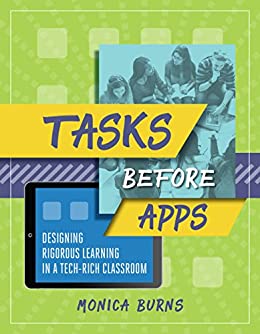
- Tasks Before Apps: Designing Rigorous Learning in a Tech-Rich Classroom by Monica Burns
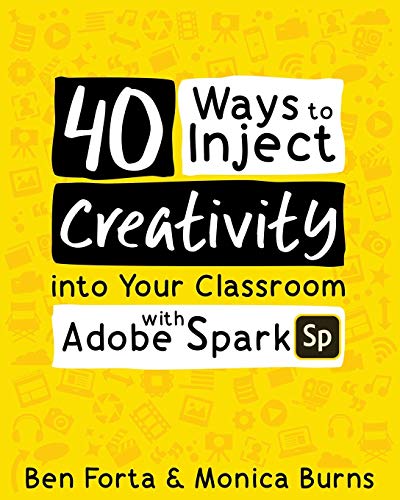
- 40 Ways to Inject Creativity into Your Classroom with Adobe Spark by Monica Burns & Ben Forta
- EdTech Essentials: The Top 10 Technology Strategies for All Learning Environments by Monica Burns
- Balance With Blended Learning: Partner With Your Students to Reimagine Learning and Reclaim Your Life by Catlin Tucker
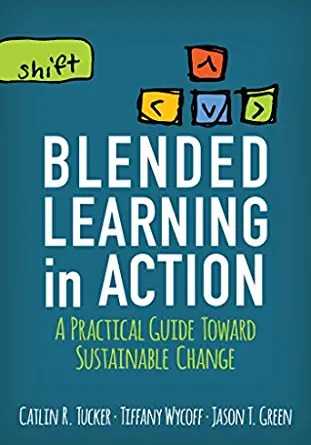
- Blended Learning in Action: A Practical Guide Toward Sustainable Change by Catlin Tucker
- Blended Learning in Grades 4–12: Leveraging the Power of Technology to Create Student-Centered Classrooms by Catlin Tucker
I know this is a rather ambitious list, so I will just have to do one at a time. I am excited about the possibilities with my teachers and their students.



References:
- Bates, T. (2019). Teaching in a digital age: guidelines for designing teaching and learning (2nd ed.). BCCampus.
Note: Links to the LMS are only operational for members of the course. For full access to the course, please create a Schoology account and contact me for the access code.
3D Printing for Learning Course Details – Part 2
The fully online course intended for teachers, librarians, curriculum specialists, campus techs and others will be chunked into 5 modules. Within each of those 5 modules, there will be a variety of activities such as discussion posts, videos to watch questions to respond to with the videos, and example student lessons to review. My reasons for integrating those example student lessons are two-fold. It is a way of simplifying the instruction, but also modeling how the content could potentially be introduced to students.
Another goal is to include a variety of activities in order to model various digital tools. I also intend to include sections pulled from online resources such as free courses. Some of these include Dremel, We are Print Lab, and Tinkercad. These sections of the content will be grouped into very brief videos that also include practice STL files for the teachers to use. Additionally, I intend to include formative assessments such as:
- brief quizzes
- assignments that require the participants to show proof of hands-on usage of their printer and reflections
Participants will have choice in the way they submit their documentation of practice. It may be photos or videos. I plan to build in predictability at the end of the module reflections by using common questions:
- Write or record a reflection about your experiences in which you address:
- What worked?
- What didn’t work?
- How will this affect your approach with students?
I will include a synchronous weekly meeting that is not lecture-based. It can be a time of sharing and reflection as well as Time for tips and suggestions. The synchronous meetings will be optional as the recordings will be shared.
The elementary staff that will access this course are very familiar with Schoology, so that will not be an obstacle. However, I will be extra careful to include clear directions in multiple formats as well as images that guide the learner. One goal of this course is not just to share the contact with staff, but to model quality online course design so that they may transfer to that their own courses.
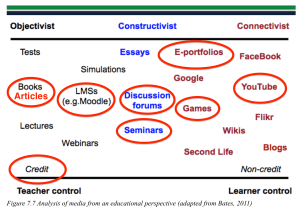
According to Figure 7.7 in Tony Bates’ Teaching in a Digital Age, the activities that I have chosen fall all over the continuum from objectivist to constructivist to connectivist. These activities also have a range of learner control versus teacher control. The main aim of my course is for staff members to practice activities that are engaging to them, fit authentically into their curriculum and that they may enthusiastically share with their learners. As this course is completely elective, I want it to be engaging, meaningful, time well spent.
The last two weeks of this largely self-paced course, largely inspired by Dremel’s Digilab Introduction of Dremel 3D Printing are outlined below:
Note: Links to the LMS are only operational for members of the course. For full access to the course, please create a Schoology account and contact me for the
TASKS & ACTIVITIES
Week 4 Lessons Content – You will want to consider how you will approach 3-D printing in your classroom. Because of the cost of materials and the length of time it takes to print, you will likely not be printing an item for every single student every day, or even with every project or unit. You will also want to consider how 3D printing may fit within your pacing calendar so that it does not feel like an additional thing to do.
Also, you’re probably not likely to find a premade lesson that fits in right with your curriculum. You will need to get creative!
How do you envision yourself using 3D printing with students? Consider these options:
Week 4 Lessons Discussion – How do you envision yourself using 3D printing with students? Consider these options: (Same as the ones listed in first content page) Which of these options feels the most comfortable with your teaching style, available technology, and time?
- All students stepping through lessons together (TinkerCad orBlocksCad) during class or computer lab time.
- Students exploring TinkerCad, BlocksCad, SketchUp on their own time at school or at home.
- Students working as a in groups to design one object.
- 3-D printing an object could be one of many choices that students have when practicing a lesson or a product in a project or performance assessment.
Lesson Plan Resources:
- Makerbot
- Dremel
- Blockscad
- MakersEmpire
- We Are 3D Print
- Various Books
- Instructional Focus Document
- Teachers Pay Teachers
Week 4 Lessons Discussion – How do you envision yourself using 3D printing with students? Consider these options: (Same as the ones listed in first content page) Which of these options feels the most comfortable with your teaching style, available technology, and time?
Week 4 Lessons Assignment
- Part A Choose one of the lessons from the resources listed in this module.
- Work through the lesson with your students or a group of students.
- Design a lesson in which your students with have an opportunity to 3D print. Outline the steps of the lesson, including all the of materials and resources you may need to successfully implement the lesson. Print a model of what students might create.
- Part B Share your creation (3D printed model)
- Take screenshots of your creations and submit with this assignment
- Write or record a reflection about your experiences in which you address:
- What worked?
- What didn’t work?
- How will this affect your approach with students?

- Week 5 Projects – Content – Read the following linked articles about the link between design thinking and 3D printing.
- MakersEmpire – Design Thinking
- Project-based lesson ideas from MakersEmpire
- 3 Methods of Design Thinking – We Are Print Lab
- Why Design Thinking – Shapeways
- Use Design Thinking to Teach 3D Printing to Kids
- Learning Progress Blog Post
- Week 5 Projects – Content – Used the attached TeachThought planning documents for project-based learning.
- Week 5 – Projects Quick Quiz – key words, steps and theories in the Design Thinking process (multiple attempts permitted)
- Week 5 Projects Assignment –
- Part A Choose one of the projects from the resources listed in this module.
- Work through the project with your students or a group of students. OR
- Design a project in which your students with have an opportunity to design a 3D print model to solve a problem. Outline the steps of the project, including a list of the potential resources that students may need to successfully implement the lesson. Print a model of what students might create.
- Part B Share your creation (3D printed model)
- Take screenshots of student creations and submit with this assignment
- Write or record a reflection about your experiences in which you address:
- What worked?
- What didn’t work?
- How will this affect your approach with students?

- Courses
- Lessons
- Videos
- Books
- Sites & Software
References:
- Bates, T. (2019). Teaching in a digital age: guidelines for designing teaching and learning (2nd ed.). BCCampus.
Note: Links to the LMS are only operational for members of the course. For full access to the course, please create a Schoology account and contact me for the access code.
3D Printing for Learning Course Details
The online course that I am designing in Schoology will be for an audience of teachers, librarians, curriculum specialists, and campus technology support specialists. This year, every single one of our elementary libraries will have 3D printers. The 3D printers that we purchased come with one license to an online self-paced course from the manufacturer. However, that course is mainly intro-level knowledge and focused on the function of the printer. My course will focus more on pedagogy and finding ways to integrate the 3D printer into the curriculum.
I will take several steps to ensure student success in the course. Primarily, I will encourage the learners to choose projects and lessons that have interest and meaning for them. Additionally, I will incorporate digital elements in the course that allow learners to review and practice the knowledge and skills they need to successfully implement 3D printing in their classroom or library. For example, I will include videos that use Playposit that have stopping points for response or check for understanding. Finally, I will include quick checks that allow for multiple submission opportunities.
According to Learning Forward, the Professional Learning Association, “Several factors influence decisions about learning designs, including the goals of the learning, characteristics of the learners, their comfort with the learning process and one another, their familiarity with the content, the magnitude of the expected change, educators’ work environment, and resources available to support learning.”
Here are some notes about those in relation to this 3D Printing course:
- Goals of the learning – The things I want course participants to know and be able to do by the end of the course are:
- how 3D printing can impact learning for elementary students.
- the basics of 3D printing and how to use 3D pre-made files.
- how to design their own 3D objects and files.
- how to integrate 3D printing into their current lessons.
- how to design projects that include 3D printing objects as options
- When students have submitted 5 examples of their 3D printed objects or screenshots of images they intend to 3D print, I will be able to monitor their progress to determine that they have met the objectives.
- Characteristics of the learners – The elementary staff participants will electively take this course. Since it is their choice to join the course, they are likely to be interested in the topic, and therefore more driven to learn.
- Their comfort with the learning process – As educators, they should be comfortable with the learning process. But true learning can often involve some discomfort or disequilibrium with gaining new skills and knowledge. The triumph comes when teachers accomplish or learn something that they perhaps struggled with a bit and overcame.
- Their familiarity with the content – Participants may or may not be familiar with the content, but interested in it. Most of them will be very comfortable within the learning management system.
- The magnitude of the expected change – I would anticipate that the 3D printing course may not have a huge magnitude of change, but the knowledge will be handy in these teachers’ bags of tricks, and another way to hook students into learning.
- Educators’ work environment – I would hope that the library will provide a safe and collegial place for the participants to practice and learn together or individually.
- Resources available to support learning – The resources participants will need are access to the internet, a 3D printer with filament, a camera to take images of their 3D printed model and a willingness to try something new. They will need to be able to create accounts on Tinkercad and Thingiverse. All of this should be available on every elementary campus in our district.
It is important to consider the TPACK model when designing an online course to emphasize that content, pedagogy and technology all three work together to support learning. It is important not to use technology just for the sake of using a cool tool. The learning needs to be about the content, learned with the pedagogical strategies, with the technology sort of being the conduit to facilitate the knowledge and strategies. This is a point that I hope to drive home in the course. I want the teachers to be inspired to find ways to use the 3D printer to support what they are already teaching.
The pedagogical strategies I intend to use in the course:
- Multiple opportunities to engage with the content
- Various forms of digital media with little to no lecture.
- Any lecture content will be delivered in a brief video format with questions built in.
- Opportunities to choose what to print and how to integrate that into instruction.
- Virtual meeting times will be available weekly during the first few weeks of the launchof the course.
The first three weeks of this largely self-paced course, largely inspired by Dremel’s Digilab Introduction of Dremel 3D Printing are outlined below:
Note: Links to the LMS are only operational for members of the course. For full access to the course, please create a Schoology account and contact me for the
Tasks & Activities
- Discussion Question A – What is your experience with 3D printing? What do you hope to learn in this course?
- Content – Videos – Watch and Consider
- Content – Articles – Read and Consider
- MakersEmpire – 7 Benefits of Using 3D Printing Technology in Education
- The Maker Movement Isn’t Just About Making and Electronics: EdSurge Talks to MIT’s Mitch Resnick
- Dremel Guide to Improved Retention Through 21 Century Learning & Hands-on Learning
- Dremel Infograhic Bridging the STEM Attraction Gap
- Week 1 Impact Quick Quiz – 7 questions related to the video and articles content (multiple attempts permitted)
- Week 1 Discussion B – How can incorporating 3D printing in classrooms support learning? How do you envision yourself implementing 3D printing with your students?

TASKS & ACTIVITIES
- Discussion Question – Have you started to imagine all of the things you might print? Check out this video to learn how to turn your dreams into reality with 3D printing software options. What else might you need to know to proceed in this course?
- Content – Videos – Watch and Consider
- Week 2 Assignment – Now you are ready to Print!
- Browse 3 the built-in files of your Dremel 3D printer
- Consider how they might connect to lessons in your curriculum
- Choose 3 of the built-in files of your Dremel 3D printer
- Practice printing
- Post images of your prints, or a brief video of your progress
- Write a reflection about your experiences in which you address:
- What worked?
- What didn’t work?
- How will this affect your approach with students?
TASKS & ACTIVITIES
- Content – Videos – Watch and Consider
- Create your free account at Tinkercad.com
- Tinkercad Starters (Complete at least 3)
- Tinkercad tutorials YouTube Playlist
- Content –10 Mini Course Videos from We Are Print Lab
- Overhangs
- Bridging
- Wall Thickness
- Orientation
- Tolerance
- Engrave and Emboss
- Bed Adhesion
- Fillets
- Sharp & Narrow Parts
- Respecting Your 3D Printer
- Week 3 Design Quick Quiz – 15 questions related to the video content (multiple attempts permitted)
- Week 3 Assignment –
- Complete 3 of the Tinkercad starters. OR
- Print one or more of the STL files included with the We Are Print Lab videos
- Take screenshots of your progress and submit with this assignment
- Write or record a reflection about your experiences in which you address:
- What worked?
- What didn’t work?
- How will this affect your approach with students?
References:
- 3D printing BASICS: Printlab Resources. PrintLab. (n.d.). https://learn.weareprintlab.com/resource/3d-printing-basics/.
- Bates, T. (2019). Teaching in a digital age: guidelines for designing teaching and learning (2nd ed.). BCCampus.
- Fink, L. D. (2003). Self-directed guide to designing courses for significant learning. Jossey-Bass.
- Fink, L. D. (2013). Creating significant learning experiences, revised and updated: an integrated approach to designing college courses (Kindle). Jossey-Bass.
- Learning Forward. (2021, May 25). Learning Designs. Learning Forward. https://learningforward.org/standards/learning-designs/?_ga=2.252671497.1492384110.1627011156-954856246.1626565683.
- McTighe, J. &Wiggins, G. P. (2005). Understanding by design. Association for Supervision and Curriculum Development.
- The now: What is 3d printing? GCFGlobal.org. (n.d.). https://edu.gcfglobal.org/en/thenow/what-is-3d-printing/1/.
- TPACK.ORG. (n.d.). http://tpack.org/.
Note: Links to the LMS are only operational for members of the course. For full access to the course, please create a Schoology account and contact me for the access code.
3D Printing for Learning
To support the successful implementation of the 3D printer initiative in our district, I am in the process of developing an online course called 3D Printing for Learning.
The online course that I design in Schoology will be for an audience of teachers, librarians, curriculum specialists and campus technology support specialists. This year, every single one of our elementary libraries will have 3D printers. The 3D printers that we purchased come with one license to an online self-paced course from the manufacturer. However, that course is mainly intro-level knowledge and focused on the function of the printer. My course will focus more on pedagogy and finding ways to integrate the 3D printer into the curriculum.
As the Schoology system admin for my district for six years, I am very comfortable working in that learning management system. I feel comfortable with using the technology of Schoology and the 3D printer on a very basic level. It will take me some time to develop the content as I want to be choosy and not overwhelm the learner. I have a tendency to include too many resources, so I want to ensure to be very selective in resources, and also provide the learner with choice. This knowledge management will require some balance.
I have a mix of teaching styles, and I encourage lots of exploration. However, I am very aware that the things that I believe about learning to do not always transfer to my teaching. That is largely due to time constraints. For example, with the audiences I generally work with, I may have 30 minutes in a monthly PLC time block. That is not enough time for them to engage in deep learning of anything, especially when I tend to fill that time with a mix of updates about various topics.

I believe that the four learning theories: Behaviorism, Cognitivism, Constructivism, and Connectivism support blended learning and will all fit into my course development in some way.
Behaviorism will have a role in the course in a couple of ways. If the learner wants to succeed in the course, they will need to engage in the activities, and invest the time to learn. The activities in the course will be mixed, and some will require more effort than others. To encourage learners to proceed and not get discourse, they will need frequent feedback. I will build in a few (but not many) self-checking activities so that the learners will move forward. I have personally experienced self-paced courses that are easy to proceed through because the correct answers are shown at the end of the quick module, or the learner has unlimited attempts. This does not generally lead to deep learning.
Cognitivism which focuses on memory and problem solving, will absolutely fit in with some quick checks for understanding. Some examples of these might be to build in a Quizlet game on the basic vocabulary of 3D printing such as: scale, slice, support, filament, extruder. Each module of the course will build upon the other, and include quick assessments that spiral in content knowledge from previous modules.
Constructivism, which focuses on experiences, will be the basis of the course. I intend for the learners to have hands on experiences with the 3D printer and their software tool of choice. There will be points along the way where the learners will need to demonstrate that they are practicing the skills by uploading photos of their creations or screenshots of their software work.
Connectivism will also be woven in the class because the learner must be able to determine the important and unimportant information relevant to their role. For example, on the website Thingiverse, there are all sorts of 3D files that users are able to download and print. A preliminary activity might be to print an object that was pre-designed just to get the experience of loading the filament, aligning the build plate and ensuring the object prints. Because of the time and materials needed to print they would need to make a good choice about which object to print. It should be something that would apply to their teaching role or content in some way.
I am hopeful that through the development of this course, I will be able to do a better job of building in the teaching styles that fit with my beliefs, since the course should span 5 weeks. I intend to work in the COVA method, so that the learners have choice, ownership, voice and authentic learning. My goal is that by the end of the 5 weeks, the learners will have 3D printed objects, some skills to impart to students and a lesson or project to implement with their students appropriate to their role.
The image below outlines the basic structure of the course.

I used Fink’s 3-Column Table and McTighe’s Understanding by Design to outline the structure of the 3D printing course.
Fink’s 3-Column Table Plan for Online Course
Understanding by Design Plan for Online Course
- Bates, T. (2019). Teaching in a digital age: guidelines for designing teaching and learning (2nd ed.). BCCampus.
- Fink, L. D. (2003). Self-directed guide to designing courses for significant learning. Jossey-Bass.
- Fink, L. D. (2013). Creating significant learning experiences, revised and updated: an integrated approach to designing college courses (Kindle). Jossey-Bass.
- McTighe, J. &Wiggins, G. P. (2005). Understanding by design. Association for Supervision and Curriculum Development.
Action Research Plan and Reflection: School Library Engagement with 3D Printing
This session of EDLD 5315 Assessing Digital Learning & Instruction has provided authentic, timely and relevant learning to help me succeed in the role as a District Instructional Technologist. I now have the skills that I need to drive the elementary library 3D printing initiative to success. With the action research plan outlined below, I hope to demonstrate that equipping libraries with makerspace technology, such as 3D printers, increases engagement in our library learning hubs.
According to Craig Mertler, action research involves the following 4 stages:
Planning – My research plan is outlined in the slides, timeline & narrative and literature review below. Another element of planning is reviewing related literature. I found this process extremely valuable, for multiple reasons. First, it validated that the initiative I have planned has relevance in supporting students with developing 21st century skills. Second, it helped me discover additional resources, guides, and thought leaders in the area of makerspaces and 3D printing. Third, it helped me decide that for the “tallymark” portion of my action research, I will absolutely develop an electronic form.
Acting – The collecting and analyzing of data will take places as detailed in the timeline.
Developing – Based on the results of the data, the development of a plan to make adjustments to the 3D printing initiative may be necessary. There may be varying levels of action plans (individual, team, school or district-wide). Questions to ask, might be: Did staff engage in enough preparation to implement the 3D printers? Do additional stakeholders need training? Are teacher having difficulty naturally integrating 3D printing with lessons and projects? What can the District Instructional Technologist do to provide support?
Sharing Results & Reflecting – The sharing and reflection process is critical because it can provide documentation for those that may want to try similar projects or strategies. Also, it can shed light on how to take a similar or different approach to future school or district-wide initiatives.
Throughout this course, we have been very focused on the planning stage of action research. As the 3D printer initiative progresses, I will be able to work through the acting, developing and reflecting stages.
Topic
This action research project that I design will be centered around 3D printers in elementary school libraries. Makerspaces and 3D printing is a slight shift from my original innovation plan, although the topics are still very much related. I started this program with a summer STREAM camp in our libraries as the focus of my plan. As we got closer to the the launch of our camp, it became clear to me that I wanted to broaden my topic to have an even greater positive effect in my school district libraries. I shifted the focus of my innovation plan to transforming libraries to learning hubs. The elements of transforming traditional libraries to learning hubs are: professional learning for librarians, providing maker space supplies and resources, organizing creative, collaborative engaging events in the libraries, as well as including flexible seating for an inviting atmosphere. STREAM camp was directly related to library transformation because we transformed a previously stale, underused summer library program to a fun, engaging camp that registered over 500 participants in a few hours and has received positive reviews.
Out of our 31 elementary schools, only five have 3D printers in the library. They were provided either because driven, forward thinking librarians eager to keep their libraries innovative used book fair or grant funds to purchase them, or as part of new schools. Our district is opening three new elementary schools this year, and as 3D printers are slowly becoming the standard, they are provided by the school district.
This year, there are some grant funds specifically set aside for products related to STEM learning, and bringing all of our libraries to the standard of having a 3D printer fits the bill! Although I have received approval for the project, and the 3D printers have been ordered, I have been met with some hesitancy. Colleagues have asked, “How will teachers have time to teach kids to use them?” and “How does that help us meet any of the learning standards?” and “Aren’t 3D printers just a novelty? How will they help kids learn?”
These questions are valid, and I hope to be able to provide strong evidence of success with this action research. Also, I am acutely aware that it is not a good idea to purchase technology just for the sake of having the technology. This 3D printer initiative must be led with purpose, and clear goals.
Purpose
The purpose of this action research study is to measure the impact on student engagement in the library as 3D printing is made available. Many of our libraries utilize maker spaces as well as other very engaging activities. My vision is that the novelty of the availability of a device that helps students envision an idea, create it digitally and then manufacture it into a tangible object will draw more students to the library. Some of our elementary school libraries have a somewhat structured schedule, where students visit with their entire class once a week, or every other week. In these cases, the teacher and librarian may collaborate to plan lessons. In other cases, the library may be a part of the specials rotation, meaning that students may come to the library multiple times a week, while the teacher has conference time. Both of these situations allow for the planning and implementation of structured lessons that may feature projects that include 3D printing. What is does not allow is time for students to electively visit the library. Part of my goal is to determine if 3D printing increases interest in visiting the library voluntarily, before or after school, during any free time, or for special library events.
Fundamental Research Question
To what extent does equipping elementary libraries with 3D printers impact student engagement in the library?
Research Design
I intend to conduct thorough and well-planned, mixed-method action research that includes both quantitative and qualitative data. While quantitative data can tell reveal trends and patterns, they may not tell the entire story. Therefore it is important to include survey questions that allow students, teachers, and librarians to clearly express if they have been positively impacted by having opportunities to use the 3D printers, or not. Also, I plan to make all ethical considerations before conducting the study, to include informing participants, and gaining permission from the parents of students before they are interviewed or surveyed. In Action Research, Mertler states, “If you intend to share your action research with a larger audience than the other educators in your school, you must get permission to use samples of student work, quotes from transcripts of audio or video recordings, or observation notes that you plan to share with others.” (Mertler, 2020).
Measurement Instruments & Techniques
For quantitative data, I will ask the librarians at four libraries to keep tally marks for four pieces of data on a document or electronic form that I will prepare. One tally mark for each time a 5th grade class visits during a regularly scheduled class time, one tally mark for each time a 5th grade class visits for an additional scheduled time, one tally mark for each time an individual 5th grader electively visits, one tally mark for the number of 3D printed objects created by 5th graders. Also, I will prepare a survey for 5th grade students at four libraries. The survey will be administered in September and April. The survey will contain both quantitative and qualitative questions. An example of a quantitative question would be, “Have you ever used a 3D printer?” or “Have you ever visited the library on your own because you wanted to, not as part of a class?” An example of a qualitative question on the survey would be, “Is there something you would like to be able to make or do in your school library that you have not been able to?” For additional qualitative data, I will conduct video interviews with 5th graders that include questions such as, “What do you enjoy about the library?” And “What have you learned in the library?”
Literature Review
The literature review that I conducted focus on research associated with the effects of integrating STEM and maker space and activities in school libraries. I will integrate research I have previously reviewed while developing my innovation plan for STREAM Camp with additional research regarding the use of 3D printers in schools, particularly elementary school libraries.
Analyze, Reflect and Plan
The final steps of the action research project include analyzing the data and executing an action plan based on those results. The plan may include designing more professional learning for teachers or creating additional student-focused events such as 3D printing challenges or contests.


Timeline of 3D Printer Initiative & Action Research Plan
Summer 2021
Purchase and install 3D printers in 26 elementary libraries
Printers have been ordered, but not yet received.
Fall 2021
- Librarians that have Dremel 3D printers participate in the self-paced online training course
- District Instructional Technologist conducts voluntary after-school professional learning sessions for elementary teachers
- Librarians keep tally marks of visits for quantitative data
- District Instructional Technologist conducts video interviews & surveys of 5th graders at 4 elementary campuses (with parental permission)
Winter 2021/2022
- Revisit goals & trainings with librarians
- Continue after school training sessions for teachers
- Introduce 3D printing contest for all elementary students
Spring 2022
- Librarians share total of tally marks of visits for quantitative data
- District Instructional Technologist conducts video interviews & surveys of 5th graders at 4 elementary campuses (with parental permission)
Summer 2022
- Review and share data with librarians and district leadership
- Create an action plan based on research findings. The action plan may include additional training for teachers and librarians if needed.
- Reflect on the successes and areas of needed improvement of the entire 3D printer initiative and research.
- Celebrate the successes and stay cognizant of needed improvement for future projects.
Literature Review


References
ASU Mary Lou Fulton Teachers College. (2018). What are you thinking about? Craig Mertler, Ph.D. YouTube. https://youtu.be/aCaPOtveaTg.
Mertler, C. A. (2013). Action Research (6th ed.). SAGE Publications.
TEDx Talks. (2016). Why teachers should bring 3D printers into the classroom | Stephen Elford | TEDxRosalindParkED. YouTube. https://www.youtube.com/watch?v=-yRCUIbl_Do.

Innovative Themes for Learning: School Library Engagement with 3D Printing
Review of the Literature
What type of activities and materials can schools provide in libraries that will engage students, pique their interest for challenging topics and promote authentic learning? How can school libraries become bustling learning hubs, allowing educators to integrate literature and reading to support inquiry, exploration and an enthusiasm for learning? Research shows that library transformation to include makerspaces is on the rise and reframing “what counts as valuable learning.” (Kumar, 2019; Mersand, 2019). This literature review will examine the benefits of including 3D printing as part of makerspaces for instruction and will outline how various approaches to learning can be the catalyst to change, leading to increased academic achievement. Thoughts about how STEM instruction, makerspaces, experiential learning, design thinking, and computational thinking, combined with 3D printing are all elements in an engaging library program will be briefly represented in this literature review. This review will also examine research methods from around the world and results regarding makerspace and 3D printing in libraries and classrooms.


References
Angello, Genna & Chu, Sharon Lynn & Okundaye, Osazuwa & Zarei, Niloofar & Quek, Francis. (2016). Making as the new colored pencil: Translating elementary curricula into maker activities. 68-78. 10.1145/2930674.2930723.
Asia Society. (2009). 7 Skills students need for their future. YouTube. https://youtu.be/NS2PqTTxFFc.
Baker, S. F. A. (2017, November 30). A major making undertaking: A new librarian transforms a middle school library into a makerspace aligned to high school career endorsements. Knowledge Quest. https://eric.ed.gov/?id=EJ1182647.
Bekker, T. 2015. Teaching children digital literacy through design-based learning with digital toolkits in schools. International Journal of Child-Computer Interaction. 5, (2015), 29–38. DOI: https://doi.org/10.1016/j.ijcci.2015.12.001.
Berman, A., Deuermeyer, E., Nam, B., Chu, S. L., & Quek, F. (2018). Exploring the 3D printing process for young children in curriculum-aligned making in the classroom. Proceedings of the 17th ACM Conference on Interaction Design and Children. https://doi.org/10.1145/3202185.3210799
Bers, M. U., Strawhacker, A., & Vizner, M. (2018). The design of early childhood makerspaces to support positive technological development. Library Hi Tech, 36(1), 75–96. https://doi.org/10.1108/lht-06-2017-0112
Big Think. (2013). The Seven Essential Life Skills, With Ellen Galinsky: Big Think Mentor: Big Think. YouTube. https://youtu.be/SdIkQnTy6jA.
Barefoot Computing. (2020). Computational Thinking Poster. Retrieved October 24, 2020, from https://www.barefootcomputing.org/
Bower, M., Stevenson, M., Forbes, A., Falloon, G., & Hatzigianni, M. (2020). Makerspaces pedagogy – supports and constraints during 3D design and 3D printing activities in primary schools. Educational Media International, 57(1), 1–28. https://doi.org/10.1080/09523987.2020.1744845
Brown, A. (2015). 3D Printing in instructional settings: Identifying a curricular hierarchy of activities. TechTrends, 59(5), 16–24. https://doi.org/10.1007/s11528-015-0887-1
Currier, G. (2018, January 8). (thesis). How 3-D Printing Impacts Libraries. Scribd. Retrieved from https://www.scribd.com/document/368696490/3-d-printing-impact-on-libraries
Committee on STEM Education of the National Science & Technology Council (2018) Charting a course for success: America’s strategy for STEM education
Elrod, R. (2017). Tinkering with teachers: The case for 3D printing in the education library. Education Libraries, 39(1). https://doi.org/10.26443/el.v39i1.11
Fidalgo, P., Thormann, J., & Davis, A. (2019). Libraries, new technology, and education. Interdisciplinary and international perspectives on 3D printing in education, 200–221. https://doi.org/10.4018/978-1-5225-7018-9.ch010
Fleming, L. (2017). Worlds of making: Best practices for establishing a makerspace for your school. Corwin Sage.
Fontichiaro K. (2016). Should you buy a 3D printer? Teacher Librarian, 43(4), 58–59.
Ford, Simon & Minshall, Tim. (2017). 3D printing in education: a literature review.
Freeman, A., Adams Becker, S., Cummins, M., Davis, A., and Hall Giesinger, C. (2017). NMC/CoSN Horizon Report: 2017 K–12 Edition. Austin, Texas: The New Media Consortium.
Habley, J. (2021, June 24). Best Digital Tools for Teaching & Learning. American Association of School Librarians (AASL). https://www.ala.org/aasl/awards/best.
ISTE Standards for Students. ISTE. (2016). https://www.iste.org/standards/iste-standards-for-students.
Jacobson, L. (2017). Making moves ahead. School Library Journal, 63(9), 38–44.
Julian, K. D., & Parrot, D. J. (2017). Makerspaces in the library: science in a student’s hands. Journal of Learning Spaces, 11(1), 49–63.
Kang-Young Lee and Som-Hyun Som. (2021). Effects of climate change education using 3D printing on climate literacy and science-related attitudes of elementary school students. Energy and Climate Change Education, 11(1), 49-63.
Kumar, V., Millerjohn, R., & Wardrip, P. (2019). Designing tools for observation and assessment in makerspaces. Proceedings of FabLearn 2019. https://doi.org/10.1145/3311890.3311926
Leinonen, Teemu & Virnes, Marjo & Hietala, Iida & Brinck, Jaana. (2020). 3D Printing in the wild: Adopting digital fabrication in elementary school education. International Journal of Art & Design Education. 39. 10.1111/jade.12310.
McNally, B., Norooz, L., Shorter, A., & Golub, E. (2017). Toward understanding children’s perspectives on using 3D printing technologies in their everyday lives. Proceedings of the 2017 Conference on Interaction Design and Children. https://doi.org/10.1145/3078072.3079735
Mersand, S. (2019). Makerspaces in Pre-K–12 School Libraries: A preliminary empirical analysis. In 2019 annual meeting of the American Educational Research Association. Toronto, Canada: AERA Online Paper Repository. https://doi.org/10.302/1431363
Mersand, S. (2020). The state of makerspace research: A review of the literature. TechTrends, 65(2), 174–186. https://doi.org/10.1007/s11528-020-00566-5
Partnership for 21st Century Learning (2019). Framework for 21st Century Learning. http://static.battelleforkids.org/documents/p21/P21_Framework_Brief.pdf
Shively, K. L. (2017). Reflections from the field: Creating an elementary living learning makerspace. Learning Communities Research and Practice, 5(1), Article 3.
Action Research Design Outline
Topic
The action research project that I design will be centered around 3D printers in elementary school libraries. As the courses in our Digital Learning and Leading programs have progressed, I have changed my innovation plan, although the topics are still very much related. I started this program with a summer STREAM camp in our libraries as the focus of my plan. As we got closer to the the launch of our camp, it became clear to me that I wanted to broaden my topic to have an even greater positive effect in my school district libraries. I shifted the focus of my innovation plan to transforming libraries to learning hubs. The elements of transforming traditional libraries to learning hubs are: professional learning for librarians, providing maker space supplies and resources, organizing creative, collaborative engaging events in the libraries, as well as including flexible seating for an inviting atmosphere. STREAM camp was directly related to library transformation because we transformed a previously stale, underused summer library program to a fun, engaging camp that registered over 500 participants in a few hours and has received positive reviews.
I am currently driving another initiative in our district libraries and I am eager to use the initiative as the focus of my action research. Out of our 31 elementary schools, only five have 3D printers in the library. They were provided either because driven, forward thinking librarians eager to keep their libraries innovative used book fair or grant funds to purchase them, or as part of new schools. Our district is opening three new elementary schools this year, and as 3D printers are slowly becoming the standard, they are provided by the school district.
This year, there are some grant funds specifically set aside for products related to STEM learning, and bringing all of our libraries to the standard of having a 3D printer fits the bill! Although I have gotten some level of approval for the project, I have been met with some hesitancy. Colleagues have asked, “How will teachers have time to teach kids to use them?” and “How does that help us meet any of the learning standards?” and “Aren’t 3D printers just a novelty? How will they help kids learn?”
These questions are valid, and I hope to be able to provide strong evidence of success with this initiative. Also, I am acutely aware that it is not a good idea to purchase technology just for the sake of having the technology. This 3D printer initiative must be led with purpose, and clear goals.
Purpose
The purpose of this action research study is to measure the impact on student engagement in the library as 3D printing is made available. Many of our libraries utilize maker spaces as well as other very engaging activities. My vision is that the novelty of the availability of a device that helps students envision an idea, create it digitally and then manufacture it into a tangible object will draw more students to the library. Some of our elementary school libraries have a somewhat structured schedule, where students visit with their entire class once a week, or every other week. In these cases, the teacher and librarian may collaborate to plan lessons. In other cases, the library may be a part of the specials rotation, meaning that students may come to the library multiple times a week, while the teacher has conference time. Both of these situations allow for the planning and implementation of structured lessons that may feature projects that include 3D printing. What is does not allow is time for students to electively visit the library. Part of my goal is to determine if 3D printing increases interest in visiting the library voluntarily, before or after school, during any free time, or for special library events.
Fundamental Research Question
To what extent does equipping elementary libraries with 3D printers impact student engagement in the library?
Research Design
I intend conduct thorough and well-planned, mixed-method action research that includes both quantitative and qualitative data. While quantitative data can tell reveal trends and patterns, they may not tell the entire story. Therefore it is important to include survey questions that allow students, teachers, and librarians to clearly express if they have been positively impacted by having opportunities to use the 3D printers, or not. Also, I plan to make all ethical considerations before conducting the study, to include informing participants, and gaining permission from the parents of students before they are interviewed or surveyed. In Action Research, Mertler states, “If you intend to share your action research with a larger audience than the other educators in your school, you must get permission to use samples of student work, quotes from transcripts of audio or video recordings, or observation notes that you plan to share with others.” (Mertler, 2020).
Measurement Instruments & Techniques
For quantitative data, I will ask the librarians at four libraries to keep tally marks for four pieces of data on a document or electronic form that I will prepare. One tally mark for each time a 5th grade class visits during a regularly scheduled class time, one tally mark for each time a 5th grade class visits for an additional scheduled time, one tally mark for each time an individual 5th grader electively visits, one tally mark for the number of 3D printed objects created by 5th graders. Also, I will prepare a survey for 5th grade students at four libraries. The survey will be administered in September and April. The survey will contain both quantitative and qualitative questions. An example of a quantitative question would be, “Have you ever used a 3D printer?” or “Have you ever visited the library on your own because you wanted to, not as part of a class?” An example of a qualitative question on the survey would be, “Is there something you would like to be able to make or do in your school library that you have not been able to?” For additional qualitative data, I will conduct video interviews with 5th graders that include questions such as, “What do you enjoy about the library?” And “What have you learned in the library?”
Literature review
The literature review that I include in my action research project will focus on research associated with the effects of integrating STEM and maker space and activities in school libraries. I will integrate research I have previously reviewed while developing my innovation plan for STREAM Camp with additional research regarding the use of 3D printers in schools, particularly elementary school libraries.
Analyze, Reflect and Plan
The final steps of the action research project include analyzing the data and executing an action plan based on those results. The plan may include designing more professional learning for teachers or creating additional student-focused events such as 3D printing challenges or contests.
Timeline of 3D Printer Initiative & Action Research Plan
Summer 2021 Purchase and install 3D printers in 26 elementary libraries
Fall 2021
- Librarians that have Dremel 3D printers participate in the self-paced online training course
- District Instructional Technologist conducts voluntary after-school professional learning sessions for elementary teachers
- Librarians keep tally marks of visits for quantitative data
- District Instructional Technologist conducts video interviews & surveys of 5th graders at 4 elementary campuses (with parental permission)
Winter 2021/2022
- Revisit goals & trainings with librarians
- Continue after school training sessions for teachers
- Introduce 3D printing contest for all elementary students
Spring 2022
- Librarians share total of tally marks of visits for quantitative data
- District Instructional Technologist conducts video interviews & surveys of 5th graders at 4 elementary campuses (with parental permission)
Summer 2022
- Review and share data with librarians and district leadership
- Create an action plan based on research findings. The action plan may include additional training for teachers and librarians if needed.
I believe that the best way to help people understand the world is to provide them with opportunities to actively explore, experiment, and express themselves.
Mitchel Resnick
References:
Elrod, R. (2017). Tinkering with Teachers: The Case for 3D Printing in the Education Library. Education Libraries, 39(1). https://doi.org/10.26443/el.v39i1.11
Mertler, C. A. (2013). Action Research (6th ed.). SAGE Publications.
Mitchel Resnick. (n.d.). AZQuotes.com. Retrieved June 13, 2021, from AZQuotes.com Web site: https://www.azquotes.com/quote/1217216
Crucial Conversations and Steps to Becoming a Self-Differentiated Leader with Purpose
What does it take be a successful leader and innovator? Leadership can be considered a craft built on skills that must be developed and honed over time. Communication is one of those many key skills. Throughout this class session, Leading Organizational Change, in my Digital Learning and Leading Master’s program at Lamar University, I have learned that effective leadership requires one to regulate their anxiety and emotions. With emotions in check, developing quality communication and having the bravery to keep the team on track become more attainable skills.
In A Failure of Nerve: Leadership in the Age of the Quick Fix, Rabbi Edwin Friedman suggests that more than a set of skills, leadership is an emotional process of regulating one’s own anxiety. I have been fortunate in my career to have stellar role models as leaders. On many occasions, I have observed as they diplomatically held their ground, shared difficult news to large groups and supported groups through challenging situations and transitions. I found myself wondering how they managed these events, seemingly unflappable. They managed by keeping their anxieties regulated.
In the video Friedman’s Theory of Differentiated Leadership, Dr. Johnathan Camp further explains that some people in organizations are poorly differentiated and act like viruses, infecting the organization with their anxieties. With gossip and sabotage, they can create triangles and more anxiety for others, leading to stress and burnout.
A well-differentiated leader is less likely to become lost in the anxious emotional processes swirling about.
Edwin Friedman
The differentiated leader that is non-anxious is like an emotional immune system in an organization that is chronically anxious. This type of leader eventually brings calm to the organization, after some disruption to the way things have always been.
As I grow in my Digital Learning & Leading journey, it is becoming clear to me that while I possess the people skills of being approachable and having empathy, I have work to do in the areas of honest, clear communication and regulating my anxieties. If I aim to lead, change and innovate, I must have the bravery to risk that some people in the organization may be displeased. For the good of the group, and the innovation, that will sometimes be the case.
Having the ability as a self differentiated leader to regulate my emotions and anxieties will serve me well when the need to have crucial conversations arises.
Leaders frequently have the need to engage in some Crucial Conversations. Examples of crucial conversations in the workplace are:
- introducing an innovation or change
- setting a boundary with a colleague or subordinate
- leading a group through a difficult transition or situation
In order to achieve my wildly important goal of facilitating the transformation of our school district libraries into bustling learning hubs, I will absolutely engage in some crucial conversations! Fortunately, I am equipped with the strategies outlined in Grenny & Patterson’s 2012 guidebook for successfully using conversation to drive positive organizational performance, Crucial Conversations. Some crucial conversations that I need to have to achieve the results I want are:
- developing common goals with my equal colleague about how to drive the library transformation
- developing common goals with the lead librarians about how to drive the library transformation
- sharing the library transformation vision with our Chief Learning Officials and Assistant Superintendent – This will be particularly challenging when the time comes to discuss budgets
- introducing our vision with all of the librarians
It is important to have a strategy to deal with conversations that may have high stakes, strong emotions and differing opinions in order to be prepared. When conversations become difficult and feel confrontational or unsafe, we can go into fight or flight mode. Our amygdala gets hijacked, making it difficult to process our ideas, and calmly share coherent thoughts, according to Daniel Goleman in Emotional Intelligence.


There are 8 elements of the Crucial Conversations Model that compose the BEFORE, DURING, and AFTER phases of crucial conversations. The slides below describe the elements and how they might arise in my work environment to support my wildly important goal.




In the past five weeks, I have had an opportunity to explore and build some solid steps to address the inevitable resistance to change that will occur when attempting to transform our district libraries into innovative bustling learning hubs, teeming with digital learning opportunities for students and staff.
It will require courage and persistence, as well as some give and take by all of the stakeholders. However, I am confident that with my plan outlined below, our staff and students will reap the benefits of the innovation of transforming our libraries.


As mentioned previously in this post, having the bravery to calmly take the steps to participate in the crucial conversations to propel the library transformation, will lead to ultimate success.

Ultimately, what will make the difference in being able to hold the crucial conversations, execute and measure the goals, and address the vital behaviors will be my ability to courageously step forward while regulating my anxieties. Becoming a confident differentiated leader is my key to success.
Grenny, J., & Patterson, K. (2013). Influencer: The science of leading change. New York: McGraw-Hill Professional. 
Covey, S., McChesney, C., & Huling, J. (2012). 4 disciplines of execution: Achieving your wildly important goals. S.l.: Simon & Schuster. 
Grenny, J., McMillan, R., Patterson, K., & Switzler, A. (2012). Crucial conversations tools for talking when stakes are high. McGraw-Hill. 
Friedman, E. H., Treadwell, M. M., & Beal, E. W. (2017). A failure of nerve: leadership in the age of the quick fix. Church Publishing.
References:
- Camp, J. [Mathew David Bardwell]. (2010, November 10). Friedman’s theory of differentiated leadership made simple [Video file]. Retrieved from
- Covey, S., McChesney, C., & Huling, J. (2012). 4 disciplines of execution: Achieving your wildly important goals. S.l.: Simon & Schuster.
- Friedman’s Theory of Differentiated Leadership Made Simple. (2010). YouTube. https://youtu.be/RgdcljNV-Ew.
- Friedman, E. H., Treadwell, M. M., & Beal, E. W. (2017). A failure of nerve: leadership in the age of the quick fix. Church Publishing.
- Goleman, D. (2020). Emotional intelligence: Why It Can Matter More Than Iq (10th ed.). Bantam Books.
- Grenny, J., McMillan, R., Patterson, K., & Switzler, A. (2012). Crucial conversations tools for talking when stakes are high. McGraw-Hill.
- Grenny, J., & Patterson, K. (2013). Influencer: The science of leading change. New York: McGraw-Hill Professional.
 Holly D. Landez ePortfolio